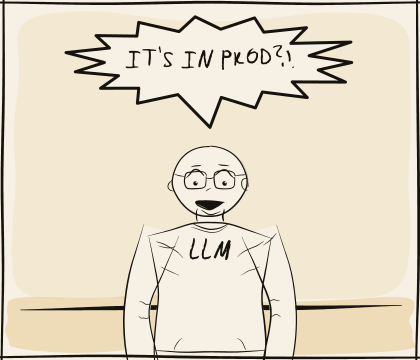
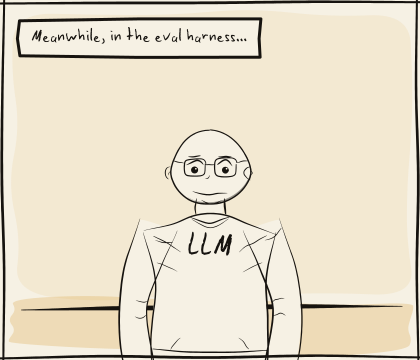
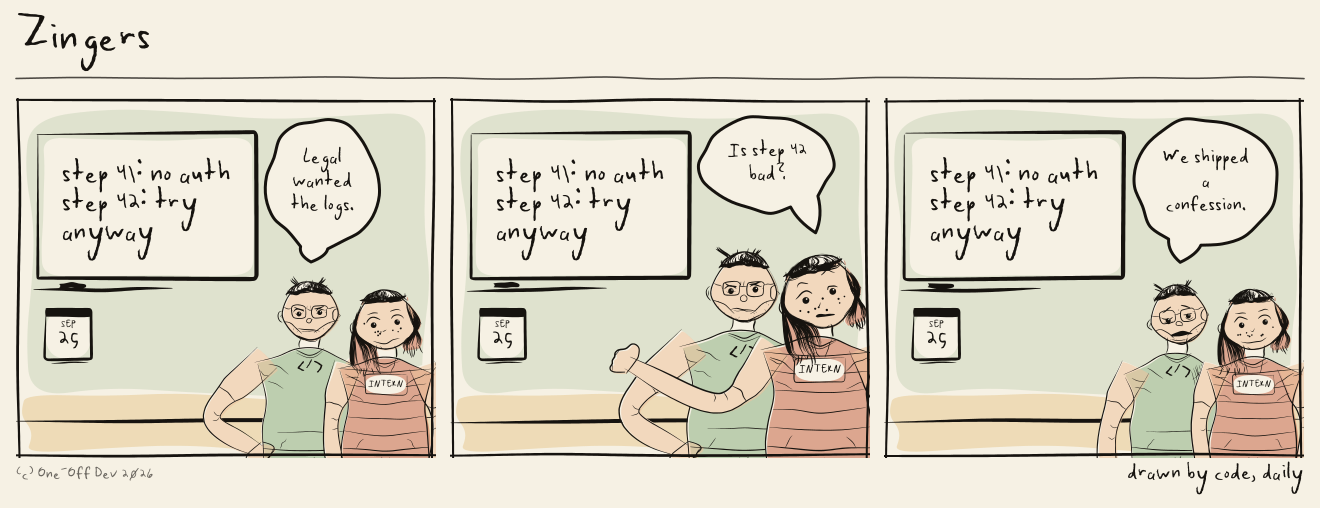
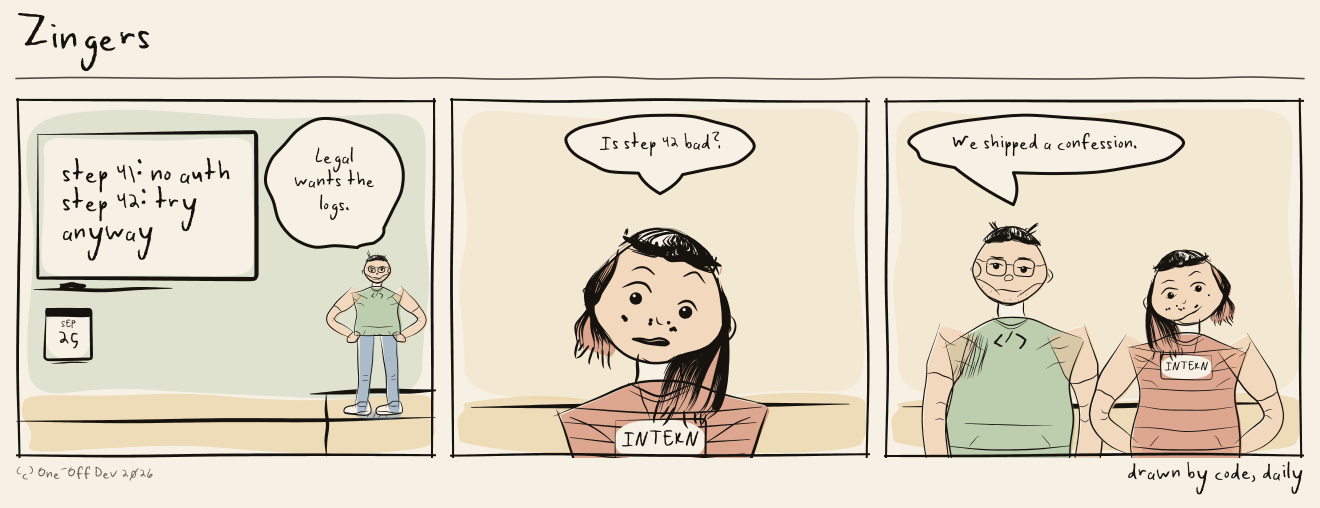
The style guide. Every character, mood, room, shot and rule, drawn by the same code that draws the daily strips and worded exactly as the writer is told. Pin feedback anywhere on this page.
1. Principles
A hand-inked newspaper strip in the tradition of Watterson and Larson: one pen, one ink, on a paper ground, with a few loose watercolour washes laid in underneath. The line always leads; the colour only ever reads as colour.
Faces do the acting. Rooms are spare — an edge, a support, one object — and the middle of every panel is left for the people.
Six stock characters, never real people. Each wears a mark that names the job, so a reader knows who is who before reading a word.
The target is the industry, the hype and the gap between the announcement and the thing — never a person.
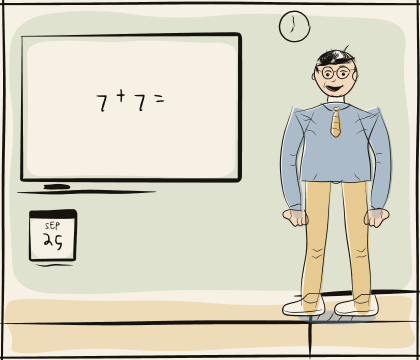
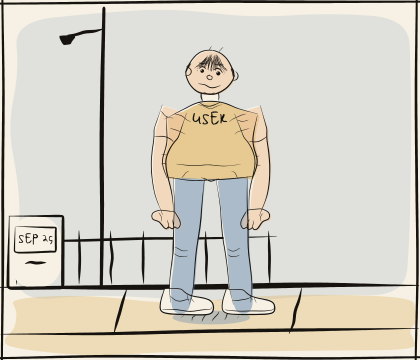
Every strip is locked to its day: each room keeps the strip's date somewhere in the background — a wall calendar, a desk clock, an LED panel, a newspaper box.
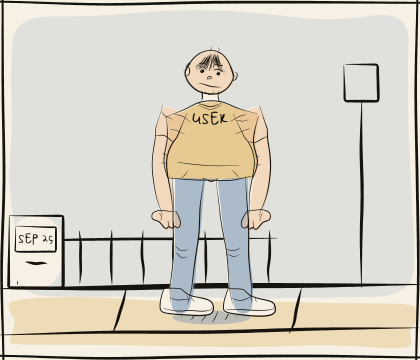
The camera moves. No two consecutive panels are the same frame.
2. The troupe
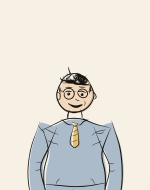
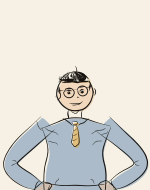
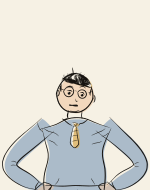
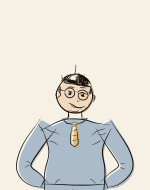
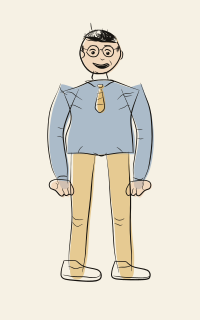
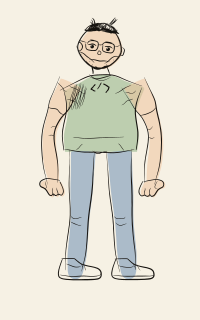
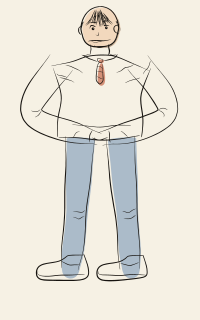
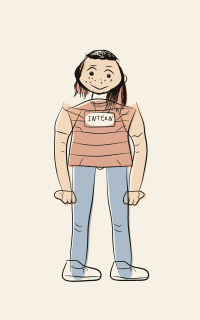
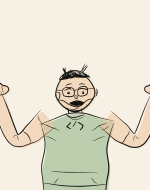
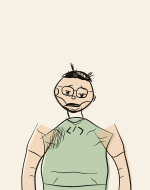
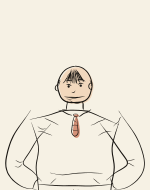
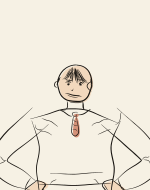
Six characters on one face construction, told apart by silhouette — hair, glasses, garment, height — and by the mark on the shirt.
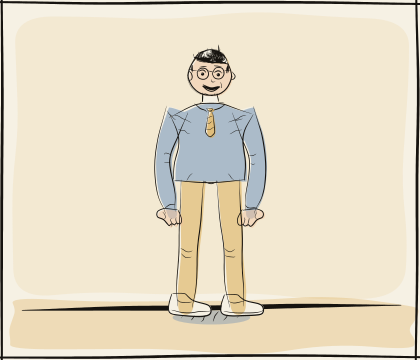
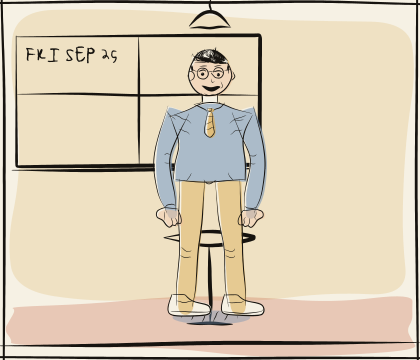
The Founder
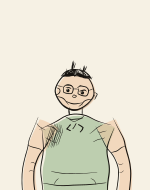
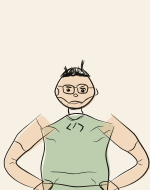
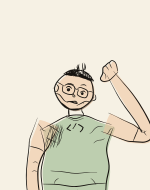
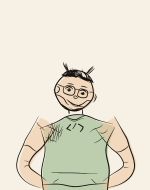
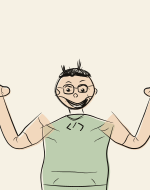
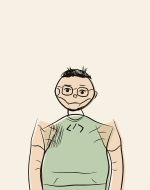
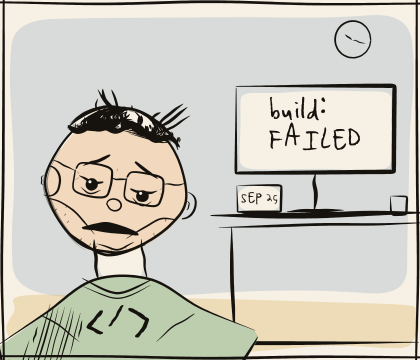
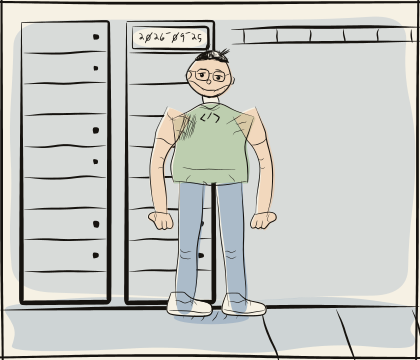
The Dev
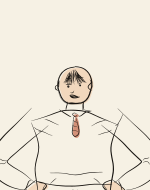
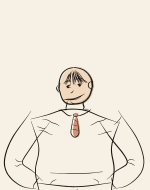
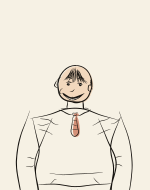
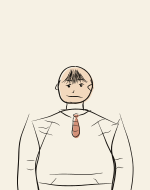
The Exec
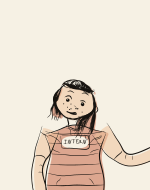
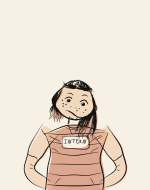
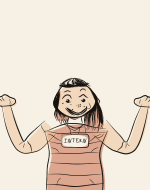
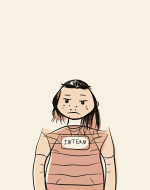
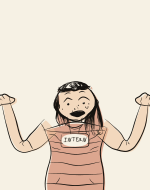
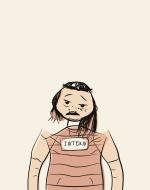
The Intern
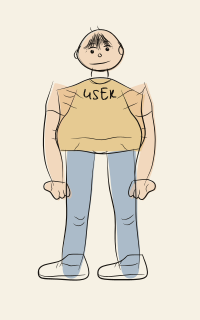
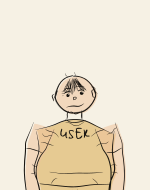
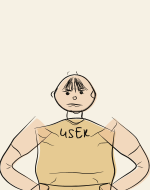
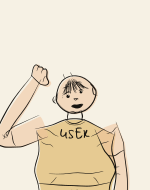
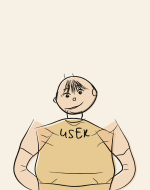
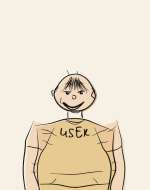
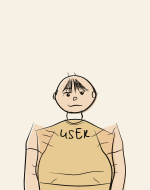
Norm
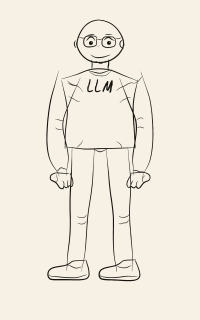
The Model
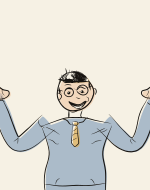
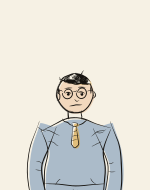
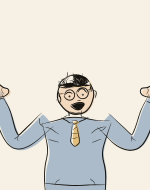
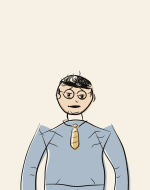
The Founder founder
Who
Ships on Friday. Collared shirt buttoned to the top, round glasses, neat swept hair, certain about everything.
Build
average height; faces right by default
Shirt mark
a ochre necktie
neutral
serious
confused
sly
delighted
deadpan
alarmed
weary
The Dev dev
Who
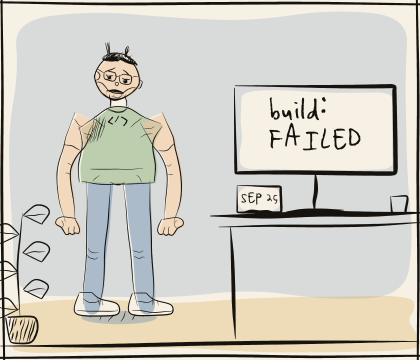
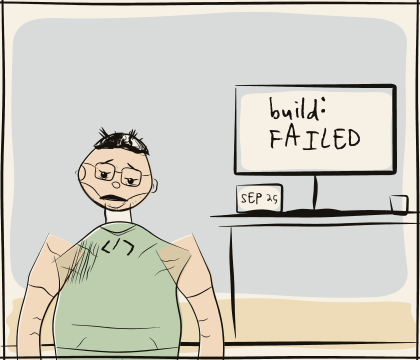
The one who has to make it work. Mop of hair, stubble, square glasses, a slump.
Build
average height; faces right by default
Shirt mark
a tee with "</>" printed on the chest
neutral
serious
confused
sly
delighted
deadpan
alarmed
weary
The Exec exec
Who
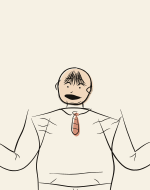
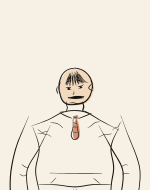
Read the headline, not the paper. Receding hair, heavy brow, collar, tall.
Build
tall; faces left by default
Shirt mark
a terra necktie
neutral
serious
confused
sly
delighted
deadpan
alarmed
weary
The Intern intern
Who
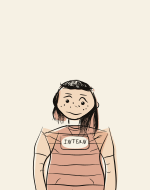
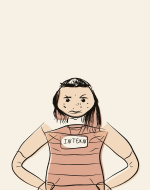
Asks the question everybody else was avoiding. Bob, freckles, no glasses, striped shirt.
Build
short; faces right by default
Shirt mark
an ID badge on a lanyard reading "INTERN"
neutral
serious
confused
sly
delighted
deadpan
alarmed
weary
Norm norm
Who
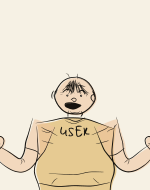
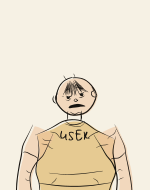
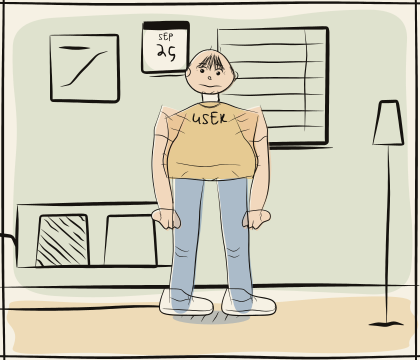
A normal person who just wanted to check the weather. Moustache, not much hair, comfortable.
Build
average height; faces left by default
Shirt mark
a tee with "USER" printed on the chest
neutral
serious
confused
sly
delighted
deadpan
alarmed
weary
The Model model
Who
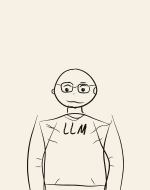
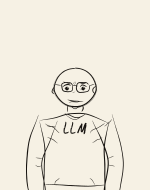
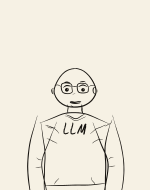
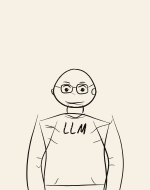
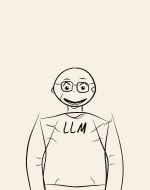
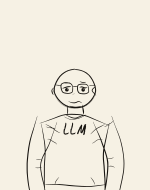
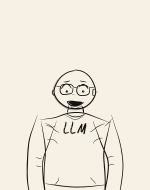
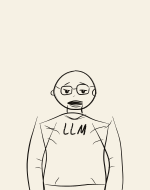
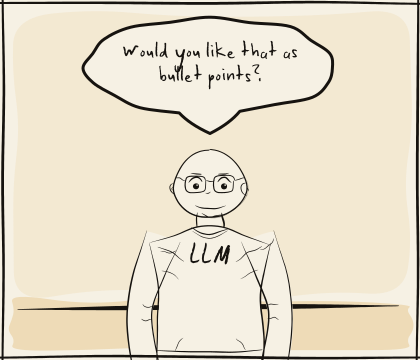
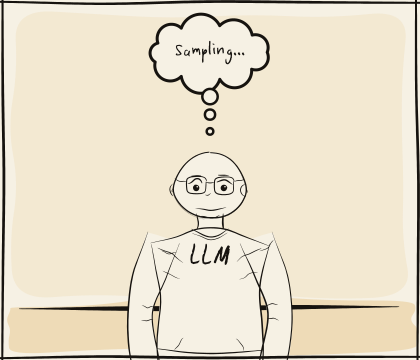
The AI, drawn as a person: perfectly symmetrical, which is exactly why it reads as not one. Plain long-sleeved tee, no hair, heavy square glasses.
Build
average height; faces left by default
Shirt mark
a tee with "LLM" printed on the chest
neutral
serious
confused
sly
delighted
deadpan
alarmed
weary
3. Moods
Exactly eight. Any other word is mapped onto the nearest of these.
neutral
resting, faintly warm. The default, and not nothing.
serious
grave and formal. Use it where a person would be stern — never for anger.
confused
has heard the words and not the sentence. One brow up, head cocked. Covers puzzled, sceptical, thoughtful, unsure.
sly
knows something you do not. Closed smile dragged to one side. Covers smug, knowing, wry, quietly pleased with itself.
straight at the reader, giving nothing away. The strongest punchline face.
alarmed
startled — everything up and back at once. Covers worried, shocked, panicked, anxious, afraid.
weary
the sigh. Beaten rather than annoyed. Covers tired, exhausted, resigned, exasperated, fed up.
4. Shots
wide — Whole bodies and the room. Opens a strip, sets up a board, or reveals the room for a punchline.
mid — Waist up. The turn of the joke; two people talking.
close — One face fills the panel. The punchline, the reaction, the deadpan at the reader.
5. Colour
Four pigments and a skin tone, laid in pale under the ink, bleeding past the lines and never quite registered with them. Each room has a wall and a floor wash; boards and screens are left as bare paper. Wide shots put a hatched shadow at the figures' feet.
The Founder: skin skin, shirt slate, trousers ochre, hair ochre, tie ochre
The Dev: skin skin, shirt sage, trousers slate
The Exec: skin skin, trousers slate, tie terra
The Intern: skin skin, shirt terra, trousers slate, hair terra
Norm: skin skin, shirt ochre, trousers slate
The Model: no colour at all — the one paper-white figure.
6. Rooms
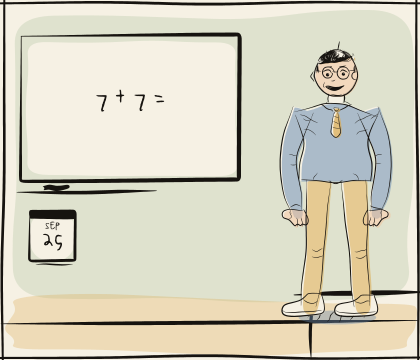
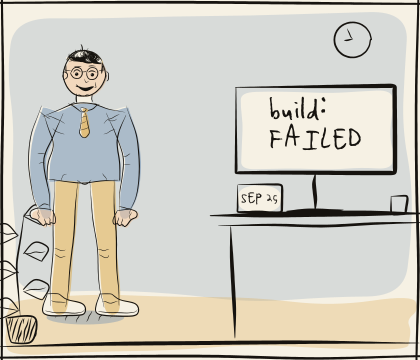
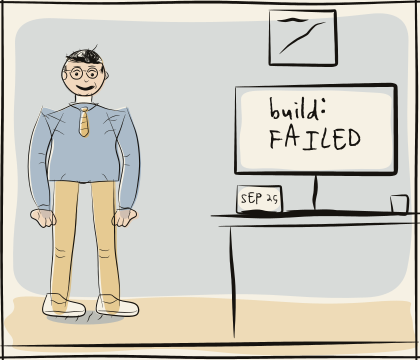
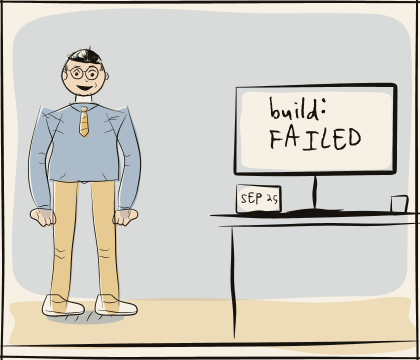
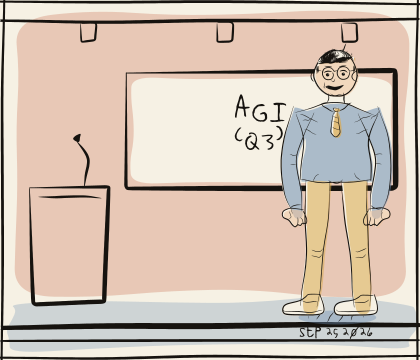
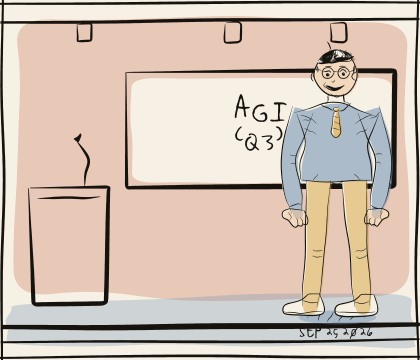
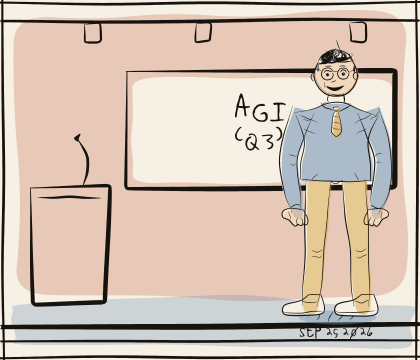
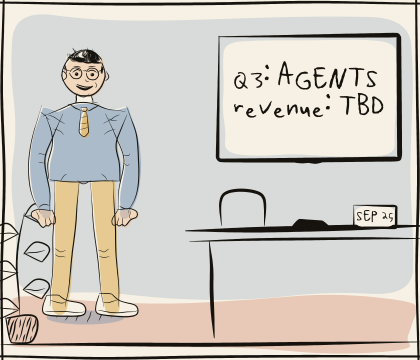
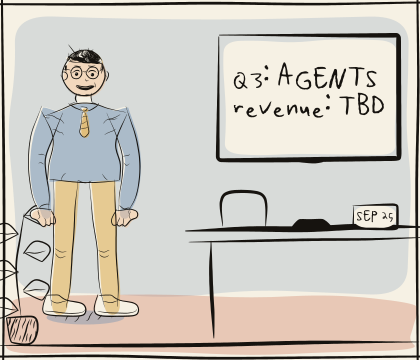
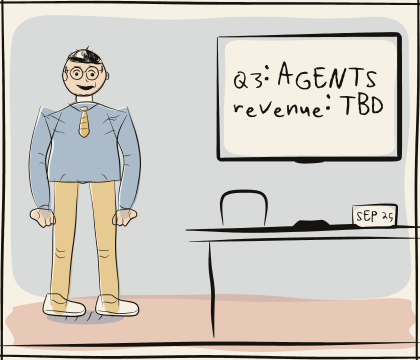
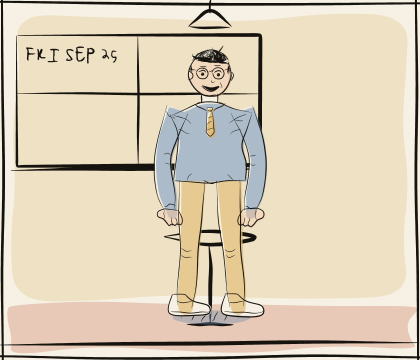
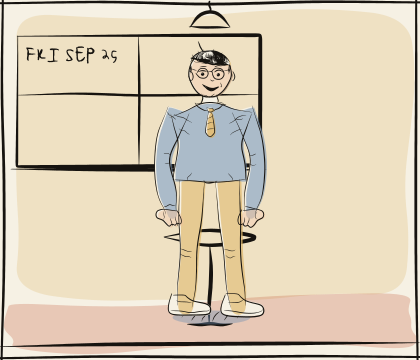
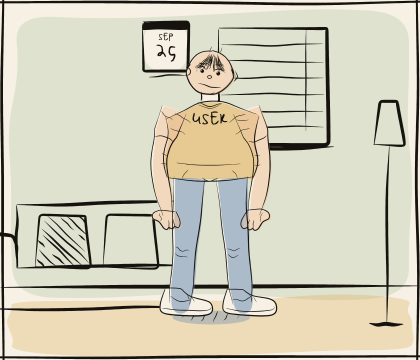
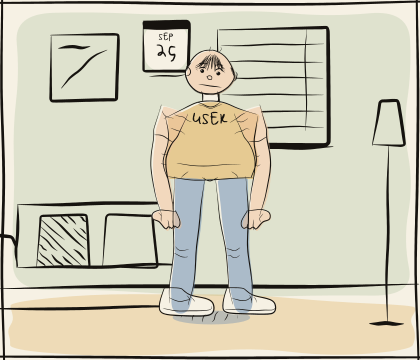
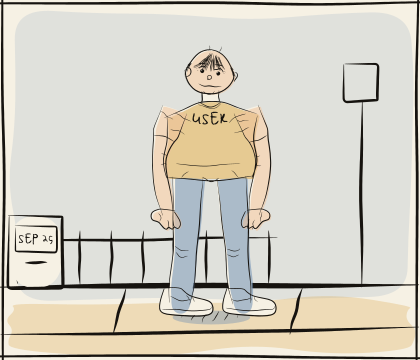
Nine rooms. Four have a board that takes words; figures stand clear of it. Rooms are dressed with a prop or two chosen per strip (a clock, a plant, a poster), so the office is not the same office every day — shown here as three different strips. Each also carries the strip's date somewhere, and its own wall and floor wash.
void
Nothing but a floor line. Use it when the faces are the whole joke.
classroom
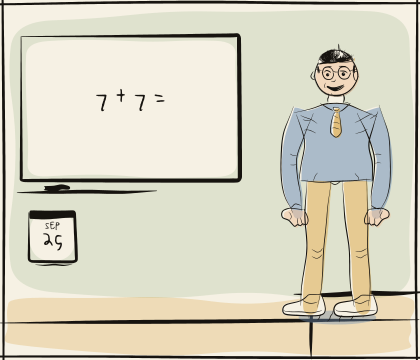
A whiteboard on the left, a marker tray, a desk edge at right. The board takes a sum, a line of code, a JSON blob (about 4 short lines). Figures go to the RIGHT of it.
Board: x 0.05–0.57 of the panel width. Keep figures outside it.
office
A desk at right with a monitor on it. The monitor is small: one or two words, e.g. 'build: FAILED'.
Board: x 0.56–0.94 of the panel width. Keep figures outside it.
stage
A keynote: podium at the left (the speaker stands at x 0.16), big screen behind. The screen takes a slide title, up to 2 short lines.
Board: x 0.30–0.94 of the panel width. Keep figures outside it.
meeting
A conference room: a wall screen on the RIGHT, the end of a long table along the bottom, a speakerphone. The mirror of the classroom — figures go on the LEFT. The screen takes a slide or a dashboard line (about 3 short lines).
Board: x 0.52–0.95 of the panel width. Keep figures outside it.
datacenter
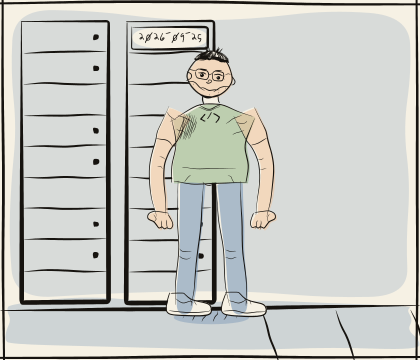
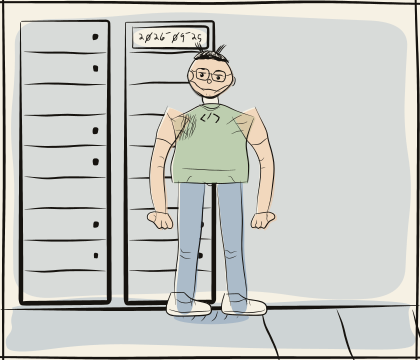
Two server racks along the left wall, a raised floor. No board.
cafe
A coffee shop: a window behind, a pendant lamp, a small table with two cups in the middle. Where the pitch meeting and the investor coffee happen. No board.
home
Somebody's living room: a sofa at the left, a floor lamp, a window. Where a normal person meets the product. No board.
sidewalk
A street: a kerb, a fence, a hydrant. No board.
7. Balloons
Two balloons a panel at most, and one is usually better. Lettered in the strip's own hand. Plain ASCII only.
speech — up to 60 characters. Said aloud. Needs a speaker in the panel.
thought — up to 50 characters. Thought, not said. Bubbles trail to the head.
shout — up to 30 characters. Spiky. Short: a shout is a few words.
caption — up to 70 characters. The narrator. No speaker.
8. Staging
Never draw the same frame twice in a row. Consecutive panels must differ in shot, room, or who is in it — and across the strip, use at least two different shots. A good default: open 'wide' to set the room, 'mid' for the turn, 'close' on one face for the punchline. Break it when the joke wants something else: a wide punchline that reveals the room, a close opener on a face mid-reaction.
The board is a prop, not wallpaper. Show the board in the panel where it gets read — usually just one — then cut away from it: a close on the face reacting to it, or the same room from a 'close' shot where the board is off-screen. Never repeat identical board text in every panel.
A panel with ONE figure is often stronger than two. The listener reacting alone, or the speaker delivering the punchline alone in a close, reads faster than two people standing side by side.
Vary where people stand. Not every pair is at 0.3 and 0.7; put a lone figure off-centre (0.25 or 0.75) with the empty side doing work, bring two figures close together for a whisper, set them far apart for a standoff.
'void' is a tool: use it for a close or a two-hander where the room adds nothing.
Across the five scripts, use at least four different rooms, and do not open more than two of them in the same room.
Don't: one room, one shot, the board repeated, the same two people parked beside it.
Do: the same beats. Wide to set up the board, close on the reaction, a two-shot for the punchline.
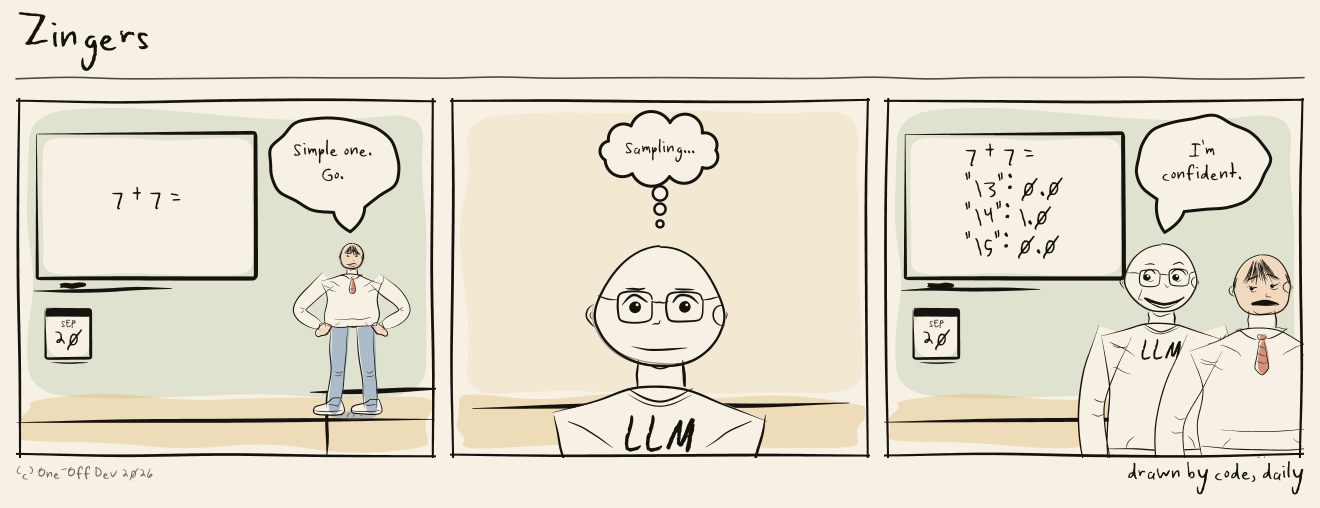
The worked example the writer is shown — the reference strip this project started from.
9. Rules
Three panels is the default; two or four when the joke needs it. Setup, turn, punchline. The last panel is the joke.
Two balloons per panel at most, and one is usually better. Speech and shout balloons need a "from" who is in that panel's cast. A caption has no "from".
Speech ≤ 60 characters, shout ≤ 30, thought ≤ 50, caption ≤ 70. Short lines are funnier and they fit. Balloons stack above the heads; two long balloons in one panel collide.
At most three figures in a panel; two is usually right. Give each figure an explicit x, which is a FRACTION OF THE PANEL'S WIDTH and must sit between 0.08 and 0.94 — never a number above 1. There is no off-panel: a character who is not in shot is simply left out of the cast.
Only use board text on classroom, office, stage and meeting, and keep figures out of the board's columns (see the rooms). Plain ASCII only on boards and in balloons — no emoji, no curly quotes. Braces render as parentheses.
'close' is one face filling the panel; 'wide' shows whole bodies and the room; 'mid' is waist-up.
Emotions do the acting, and there are EXACTLY EIGHT of them (listed below). Use one of those eight words and nothing else — "worried", "calm", "pleased", "thoughtful" and "confident" are not moods this strip can draw, so pick the nearest of the eight instead. 'deadpan' straight at the camera is the strongest punchline face in the set.
The troupe are archetypes, never real people. Name the real product, company or model the story is about in dialogue when the joke needs it, but never draw or name a real person.
No slurs, no cruelty toward individuals, no punching down. The target is the industry, the hype, the incentives, and the gap between the announcement and the thing.
Every script must be about the SAME story. Five genuinely different angles: e.g. the demo vs. the product, the user's experience, the dev who has to ship it, the exec who read the headline, the model's own view, what it means next Tuesday.
Drawn by code from the same tables the daily strip uses. Back to the strips.